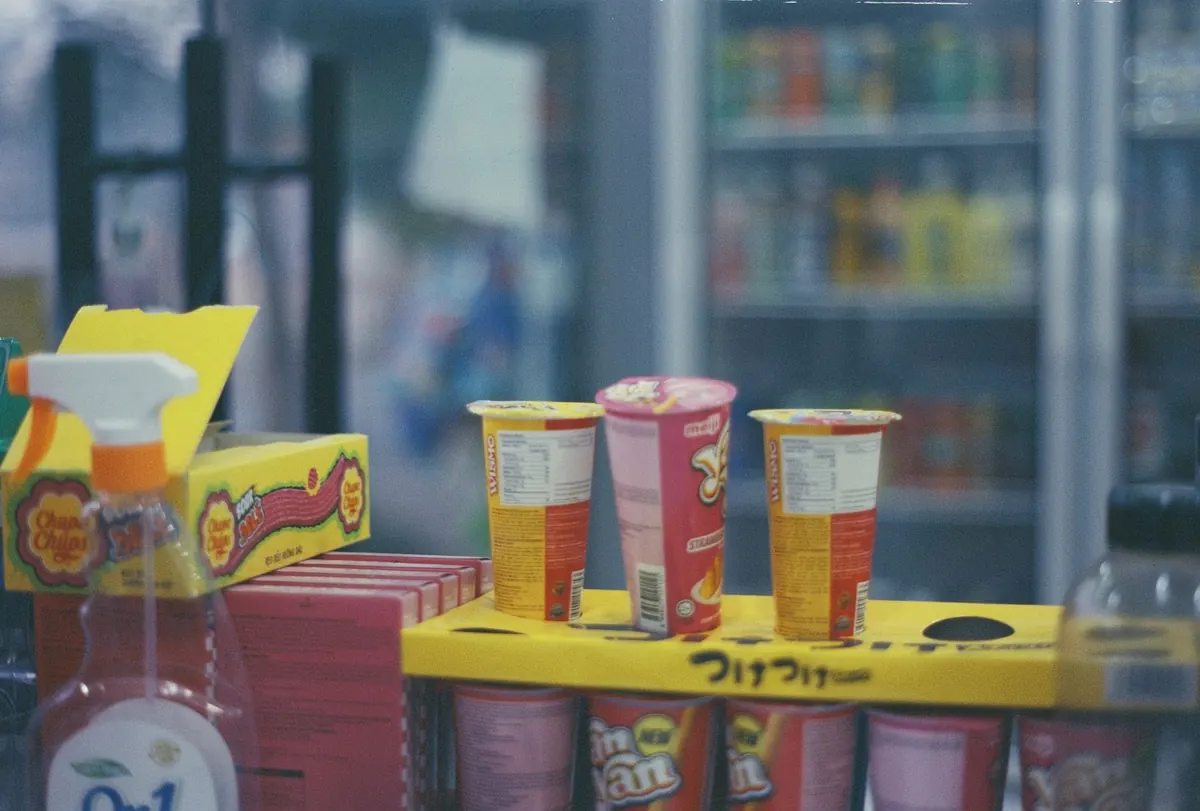
A bag of shrimp-shaped crackers from a shop you have never heard of, described in a language you cannot read, is a small act of faith. Most of the time it pays off. Occasionally you open the box to find a melted chocolate bar, a crushed tin and a best-before date that expired while the parcel sat in a sorting depot for three weeks. The gap between those two outcomes is roughly ten minutes of checking before you pay.
What follows is the checklist worth running through every time you order from a shop you do not yet trust, whether it is a single bag of Korean honey butter chips or a mixed box of Japanese convenience-store oddities.
Start With the Shop, Not the Snack
The snack is what you came for, but the shop decides whether it arrives in one piece. Before you study the product page, find the shipping page and answer three questions.
Who actually packs the parcel? A specialist importer with its own warehouse knows how to wrap a glass jar of pickled plums. A marketplace seller listing four hundred unrelated items and dispatching from a different country every week usually does not.
Where does it ship from? A site with fluent English and a local phone number can still dispatch from Osaka. That means customs paperwork, a longer transit and a genuine risk of heat damage in summer.
How long, honestly? Economy postage from East Asia often runs three to six weeks. Express is a week or less. For anything chocolate-coated, the difference matters more than the postage cost.
Then read the last twenty reviews and search them for the words crushed, melted and arrived. Skip the ones about flavour. They tell you nothing about whether the shop can pack a box.
Dates: Read the Code Twice
Three different things get confused on imported packaging: best-before, use-by and production date. Best-before is about quality, and it is what most shelf-stable snacks carry. Use-by is about safety and appears mostly on fresh food, so a dried snack with a use-by date is usually a fresh-fried product rather than a long-life one. A production date tells you when the bag was filled, not when it stops being good.
Format is the next trap. 04/05/2026 is April in one country and May in another. Japanese packs generally run year first, so 2026.05.04 is unambiguous, and they distinguish 賞味期限 (best before) from 消費期限 (use by). Get that wrong and you will either bin a perfectly good bag or eat something you should not.
Ignore the batch code. A string like L24A7 printed near the date is a lot number, not an expiry, and it does not mean the snack is from 2024.
Finally, do the subtraction. A six-month shelf life is generous for a four-day delivery and tight for a six-week one. Anything containing dairy, cheese powder, meat floss or chocolate ages fastest; hard biscuits, boiled sweets and plain fried corn snacks hold up far better in transit.
Ingredients and Allergens: Translate With Care
Translation traps worth knowing
Machine translation copes with sugar, salt, wheat flour and falls apart on compounds. The first three lines are usually fine. The interesting ingredients hide further down.
- 小麦粉 is wheat flour specifically, not flour in general.
- 花生 and 落花生 both mean peanut, sometimes rendered as groundnut.
- Schweinegelatine is pork gelatine; Rindergelatine is beef. Neither is vegetarian, and neither is always translated.
- 魚醤, nam pla and fish sauce are all fish, even when the snack tastes of nothing but salt and chilli.
- E621 is MSG, E102 is tartrazine, E120 is cochineal, which is insect-derived.
- Strutto is lard. "Vegetable fat" is usually palm.
- Vague words like seasoning, flavouring and spices can conceal shrimp powder, bonito flakes or anchovy.
Every country labels allergens differently
The United States uses a bolded Contains line under the ingredient list. The European Union bolds allergens inside the list itself. Japan gives allergens their own box on the pack. Some countries only require the most common allergens to be declared at all, and warnings such as "may contain traces" carry no fixed meaning across borders. A product that looks clean in one labelling system may simply be silent in another.
If you or someone in your household has a serious allergy, treat an unfamiliar label as a stop sign rather than a puzzle. Write to the manufacturer, or leave it on the shelf. A doctor or dietitian is the right person to advise on your specific risk.
Packaging: What Survives the Trip
Snacks fail in transit in predictable ways. Chocolate melts and then blooms, which is harmless but ugly. Crisp bags are mostly nitrogen, so they crush flat and the contents go stale if the bag is punctured. Biscuits crumble. Glass bottles of sauce leak and sometimes break. Tins dent, then survive. Hard candy is effectively indestructible.
Match the snack to the season and the speed. Chocolate, coated nuts and anything with a chocolate shell belong in a cool-month order with fast shipping, not a July economy parcel. If a listing mentions double boxing, padding or ice packs in summer, that is a seller who has done this before.
On arrival, photograph the parcel before you open it and the damage before you tidy up. Most shops ask for photos within a day or two, and a clear picture settles the argument faster than a paragraph of description.
Cost, Customs and Returns
Compare price per 100g rather than per bag. Imported packs are often smaller or larger than the photo suggests, and the shipping charge is folded into what you actually pay. Consolidating several items into one parcel spreads the postage, but a heavier box may cross your country's personal import allowance, at which point duty or handling fees appear. Check your customs authority's current rules before you order, especially for meat, dairy, seeds and fresh produce, which are commonly restricted.
Assume food is final sale. Returns are rarely economical once you have paid to send a half-crushed bag back across a border, so ask about the policy before paying, not after.
The Twelve-Point Checklist
- The seller has a real address, working contact details and a shipping page.
- You know which country the parcel ships from.
- You know the realistic transit time, not the optimistic one.
- Recent reviews do not mention crushing, melting or leaks.
- You have identified whether the date is best-before, use-by or production.
- You have decoded the date format correctly.
- Remaining shelf life still works after transit time is subtracted.
- You have translated the whole ingredient list, not the first three lines.
- You have checked for hidden fish, shrimp, gelatine and nut sources.
- You have compared the allergen labelling system with the one you rely on.
- The snack's fragility matches the season and the shipping speed.
- You know the price per 100g, your customs allowance and the returns policy.
Before You Hit Order
Start small. One or two items from a new shop tells you how they pack, how fast they ship and whether the dates are honest, and it costs less than a full box of regrets. Keep a short note of the shops that pack well and the ones that send chocolate in July. Order fragile things in cool months and slow, strange things whenever you like.
And if a label is genuinely ambiguous on something that matters to your health, that is not a puzzle worth solving to save a few pounds on a bag of crackers.
Photo: Xanh / Pexels